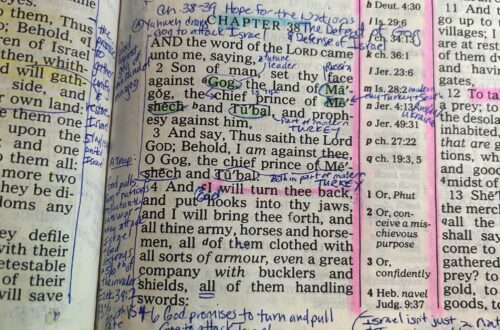
The Bible is sometimes referred to as “God’s love letter to us,” and for good reason—it speaks repeatedly of God’s unfathomable love for each of us and reveals how we can have a real, personal relationship with Him, both now and for eternity.
Although the Bible is chock-full of recorded history, prophecy, wisdom, instruction and warning, perhaps its most important message is that of Jesus Christ and God’s plan for our salvation. Rather than quoting the teachings of any particular denomination or religious tradition, we’ll look directly and only to actual Scripture for the answers.
Basics of Salvation

The Bible says we are born physically alive, but we are all spiritually “asleep” (or dead) until we turn to Jesus and accept him as our personal Lord and Savior. The key word being “personal,” because even the devils know Jesus is Lord and tremble, but they are not saved.
“Thou believest that there is one God; thou doest well: the devils also believe, and tremble.”— James 2:19
The phrase “born again” comes directly from Jesus:
“Except a man be born again, he cannot see the kingdom of God.”
— John 3:3
Jesus explained that He was not talking about a second physical birth (you have already been physically born), but was talking about spiritual birth:
“That which is born of the flesh is flesh; and that which is born of the Spirit is spirit.”
— John 3:6
What is a Spiritual Birth?
In the Bible, spiritual birth is a supernatural event where God gives new spiritual life to a person, often described as being “born again” or “born from above.” When we accept Jesus, God breathes His Holy Spirit into our inner person to give us eternal life in/through Him. This is not hyperbole, God literally gives our spirit new life so that we may abide in Him for eternity. (If you refuse Him, you spend an eternity apart from God, feeling the consequences both spiritually and physically.)
Being born again marks the start of a relationship with God, moving a person from spiritual death (eternity apart from God) to eternal life with God. You are not suddenly perfect, but will continue to be a work in progress. You are, however, forgiven, and the Spirit of God now dwells in you and will guide you if you will yield to his gentle voice.
A New Creation in Christ
According to 2 Corinthians 5:17, a person who is in Christ becomes a new creation where the old life is gone and a new one has begun:
“Therefore, if anyone is in Christ, the new creation has come: The old has gone, the new is here!”
— 2 Corinthians 5:17
You may not physically feel any different after becoming born again, most people don’t — because it is not a physical realm event. You will, however, find that as your closeness to God grows, your desire to please and serve Him will also grow, and your desire to sin will not only diminish, but you will feel the gentle conviction of the Holy Spirit when you do.
 According to the Bible, every human being needs to be “saved” because we are separated from God by sin. This separation leads to spiritual death and eternal judgment. Salvation is God’s way of forgiving our sins, restoring our relationship with Him, and granting us eternal life, thereby “saving” use from eternal damnation.
Everyone Has Sinned
“For all have sinned, and come short of the glory of God;”
– Romans 3:23“For there is not a just man upon earth, that doeth good, and sinneth not.”
– Ecclesiastes 7:20
The Penalty for Sin is Death
“For the wages of sin is death; but the gift of God is eternal life through Jesus Christ our Lord.”
– Romans 6:23
We Cannot Save Ourselves
“For by grace are ye saved through faith; and that not of yourselves: it is the gift of God: Not of works, lest any man should boast.”
– Ephesians 2:8–9“Not by works of righteousness which we have done, but according to his mercy he saved us…”
– Titus 3:5
We Will All Face Judgment – The Saved and the Unsaved
“And as it is appointed unto men once to die, but after this the judgment” – Hebrews 9:27

The Bema Seat or Judgment Seat of Christ
The “Bema” seat judgment is the biblical event where believers are evaluated by Jesus Christ to receive rewards for how they lived their lives on earth.
The term comes from the Greek word bēma, which referred to a raised platform or judicial bench in ancient Greece where judges or officials would hand out athletic rewards or judicial verdicts.
The Good News of Salvation
“But God commendeth his love toward us, in that, while we were yet sinners, Christ died for us.”
– Romans 5:8“For God so loved the world, that he gave his only begotten Son, that whosoever believeth in him should not perish, but have everlasting life.”
– John 3:16

Someone actually asked this exact question in the Bible—a man absolutely terrified for his life when he asked.
It happened at midnight. After a violent earthquake ripped through the prison foundations and threw open every cell door, the jailer woke up in utter panic. Expecting his prisoners to have escaped, he drew his sword to end his life rather than risk a violent execution for his failure. But when the guard realized that Paul and Silas hadn’t fled, his terror turned to profound awe realizing that God had moved in his presence. He fell trembling before his prisoners and blurted out the most important question in human history: “Sirs, what must I do to be saved?”
“Sirs, what must I do to be saved?”
— Acts 16:30
Paul and Silas answered:
“Believe on the Lord Jesus Christ, and thou shalt be saved…”
— Acts 16: 31
Romans tells us how we can become born again and receive our salvation:
“That if thou shalt confess with thy mouth the Lord Jesus, and shalt believe in thine heart that God hath raised him from the dead, thou shalt be saved.”
— Romans 10:9
Remember, the Bible tells us that we cannot save ourselves and that salvation rests upon Jesus Christ and what He has done—not upon our ability to make ourselves worthy of Him.
 Biblical belief means far more than just intellectual agreement. It is entirely possible to believe that Jesus existed, and even believe that the Bible is true, without ever being changed by it. In the New Testament, Jesus’ brother James wrote a letter to early believers to warn them about this exact trap. He points out an unsettling reality:
“Thou believest that there is one God; thou doest well: the devils also believe, and tremble.”
— James 2:19
They know who God is, but they do not love or trust Him.
Saving faith is actually putting your trust in and personally resting your weight on who Jesus is and what He did for you: paid the price for your sins.
Paul summarized this grand rescue plan beautifully:
“Christ died for our sins according to the scriptures; And that he was buried, and that he rose again the third day according to the scriptures.”
— 1 Corinthians 15:3–4
It is the difference between merely accepting facts about Jesus and actively placing your trust in Jesus. Saving faith involves trusting Christ—who He is and what He accomplished for us. There will be fruit, or evidence, of whether you have made Jesus true Lord of your heart and life, or just say the words.
If you truly believe, there will be evidence in your life. For example, the phrase “faith without works is dead” is found in the New Testament in James 2:20 and James 2:26. The entire passage of James 2:14–26 explicitly focuses on this topic, but here are two verses that indicate simply believing in Jesus is not enough, your lifestyle will follow what you truly believe and show fruit.
“You foolish person, do you want evidence that faith without deeds is useless?” (Or “faith without works is dead” in the KJV). James 2:20:
“As the body without the spirit is dead, so faith without deeds is dead.” James 2:26:
 Biblically, repentance simply means a change of mind that leads to a change of direction. It is the act of turning away from our sin and turning toward God.
During His earthly ministry, Jesus made it clear exactly who qualifies for this turn:
“I came not to call the righteous, but sinners to repentance.” — Luke 5:32
Repentance should never be confused with trying to reform our lives or making ourselves “good enough” before we dare to approach God. We do not clean ourselves up so that Christ will save us. We come to Christ precisely because we are dirty, helpless, and in desperate need of a Savior.
We don’t clean ourselves up so that Christ will save us.
We come to Christ because we need saving.
 There is no required or word-for-word “sinner’s prayer” anywhere in the Bible. It does, however, give us this beautiful promise:
“For whosoever shall call upon the name of the Lord shall be saved.”
— Romans 10:13
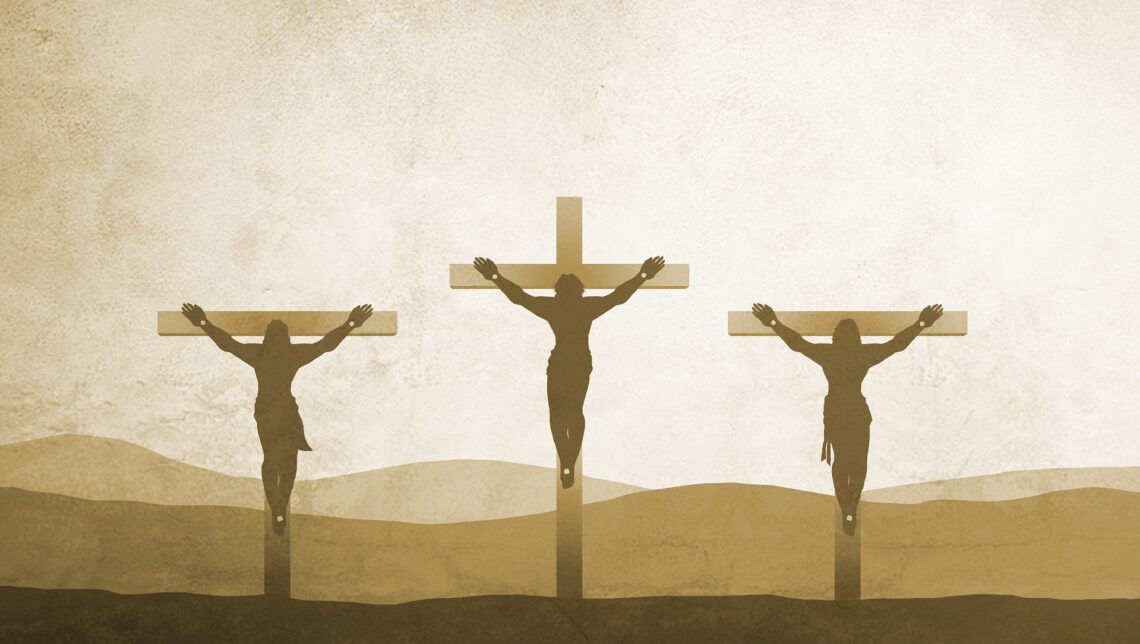
“Jesus answered him, “Truly I tell you, today you will be with me in paradise.” — Luke 23:43 (NIV)
The reason the thief dying on the cross did not have confidence in prayer, or ritual, he simply believed Jesus could and would save him if he asked. How each person is drawn to the Lord is unique and how each person comes to accept the Lord is also unique.
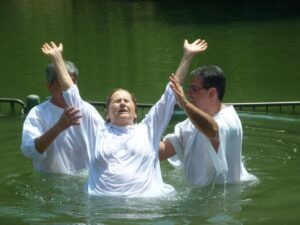 Baptism is important. Jesus commanded it, and the early church practiced it.
“Go ye therefore, and teach all nations, baptizing them…”
— Matthew 28:19
However, at the same time, the Bible repeatedly describes salvation as received through faith, and the thief on the cross was promised paradise without an opportunity for water baptism.
Christians have interpreted passages such as Mark 16:16, Acts 2:38, Acts 22:16 and 1 Peter 3:21 differently so we shouldn’t dismiss baptism as unimportant, but neither should we overlook the thief on the cross or the many passages placing salvation in Christ who were not baptized and yet were still saved.
The power to save belongs to Jesus, and to Him alone.
 In the New Testament of the Bible, the apostle John writes:
“These things I have written to you who believe in the name of the Son of God, that you may know that you have eternal life, and that you may continue to believe in the name of the Son of God.”
— 1 John 5:13 NKJV
Our assurance of salvation should never depend on our shifting emotions or how “religious” we happen to feel on any given day. Feelings change, but God’s promises remain steady.
In order to find true assurance, we can ask ourselves one simple, fundamental question: What am I ultimately trusting to save me?
Am I relying on my own goodness? (You feel “unsaved” now because you have sinned or feel like you are now “bad.)
Am I counting on my church or a religious ceremony? (We should not rely on God’s grace and live a life of sin feeling confident we are saved no matter what because of a ritual or church affiliation.)
Am I hoping my good works will be enough? (Doing “good things” for the wrong reasons does not make them “good works because God looks at the heart. Your good works did not get you saved and will not keep you saved…. only your faith in Jesus will ever be enough.)
Or am I trusting in Jesus Christ alone?
Knowing if you are saved is a simple matter of faith. As the Scripture reminds us:
“He that hath the Son hath life; and he that hath not the Son of God hath not life.”
— 1 John 5:12
If your trust is in Jesus, the Bible says you have (eternal) life. You don’t have to carry the heavy burden of trying to earn your way to God, because your salvation is held together by His faithfulness, not your perfect performance. Faith in Him — not your failures, lets you live with the quiet certainty that you are safe in His hands because His grace is sufficient.
Finding Faith in the Midst of Your Struggles
 Having faith in God doesn’t mean you’ll never have questions, fears, or doubts, yet somewhere along the way, many of us picked up the idea that real faith has to feel completely unshakeable all the time. Yet Jesus told us what happens when we are weak in ourselves, we can actually become stronger when we rely on His strength:
9 “But he said to me, ‘My grace is sufficient for you, for my power is made perfect in weakness.’ Therefore I will boast all the more gladly of my weaknesses, so that the power of Christ may rest upon me.
10 For the sake of Christ, then, I am content with weaknesses, insults, hardships, persecutions, and calamities. For when I am weak, then I am strong.”
— 2 Corinthians 12:9-10 ESV
It is the strength of our Savior that matters infinitely more than our own thoughts and feelings. In fact, Scripture never commands us to have a blind, unthinking faith. Instead, we are explicitly told to use discernment and examine what we are taught:
“Beloved, believe not every spirit, but try the spirits whether they are of God…”
— 1 John 4:1
God is not intimidated by an inquiring mind. If you are struggling to find clarity or direction in the middle of a trial, He openly invites you to ask Him for help:
“If any of you lack wisdom, let him ask of God, that giveth to all men liberally, and upbraideth not; and it shall be given him.”
— James 1:5
The word upbraideth means that He won’t scold, mock, or resent you for asking. We see this gentleness clearly in how Jesus treated people whose faith faltered. When Thomas doubted the resurrection, Jesus didn’t cast him out; He simply showed him His hands and met him in his uncertainty. And in another remarkably raw, honest moment, a desperate father looked at Jesus and made a candid confession:
“The father instantly cried out, ‘I do believe, but help me overcome my unbelief!'”
— Mark 9:24 NLT
Jesus didn’t walk away or reprimand the man for admitting his faith was fragile. He didn’t demand total certainty before He would help. Instead, He met the man right there in the tension of his belief and his doubt. It’s a beautiful reminder that faith isn’t a flawless emotional state—it is simply turning toward Jesus with whatever vertical slice of trust you have left.
When you feel your assurance slipping, remember that you don’t have to manufacture this trust out of your own human strength. Scripture tells us that God has already dealt to every person a specific “measure of faith” (Romans 12:3). Because faith is a gift given by Him, it isn’t a competition or a measure of your perfection. He gives you exactly what you need to hold on to Him day by day.
“For by the grace given me I say to every one of you: Do not think of yourself more highly than you ought, but rather think of yourself with sober judgment, in accordance with the faith God has distributed to each of you.”
– Romans 12:3 NIV
 No, reading the Bible is a wonderful to learn more about God and His Divine will for you and the future of all mankind, but Satan has read the Bible and so clearly, knowledge is not what brings about salvation.
The thief on the cross didn’t have time to complete a course in theology much less even utter a long prayer. What if someone cannot read? Or never owned a Bible? Reading the Bible can deepen our faith and relationship with our heavenly Father, but it is not a requirement of salvation.
Salvation begins with Christ. Learning and spiritual growth continue afterward.
“But grow in grace, and in the knowledge of our Lord and Saviour Jesus Christ.”
— 2 Peter 3:18
The fact that Christians are told to grow means we aren’t expected to begin knowing everything.
Religions, Churches and Denominations
 The Bible does not say that membership in a particular denomination is required in order to receive the free gift of salvation from the Lord.
Jesus said:
“I am the way, the truth, and the life: no man cometh unto the Father, but by me.”
— John 14:6, KJV
The apostle Peter said of Jesus:
“Neither is there salvation in any other: for there is none other name under heaven given among men, whereby we must be saved.”
— Acts 4:12
The New Testament places salvation in Jesus Christ alone, not membership in a religious organization; however, churches are important to our growth and spiritual well-being. Churches can teach, encourage, and correct us, as well as can give us fellowship with other believers, opportunities to serve others, and help us grow in our faith. Scripture tells believers are not to abandon gathering together (Hebrews 10:25). but it is not a requirement of getting or maintaining your salvation.
Jesus saves. That’s all you need to remember.
 According to Jesus, yes. And, this is one of the Bible’s more sobering teachings.
Jesus told Nicodemus that his religious activities and status were not enough and that he, like all men, needed to be born again. Nicodemus was not an atheist or an irreligious man. He was a Pharisee and “a ruler of the Jews” (John 3:1).
Yet Jesus told him:
“Ye must be born again.”
— John 3:7
Jesus also warned:
“Not every one that saith unto me, Lord, Lord, shall enter into the kingdom of heaven…”
— Matthew 7:21
The Bible reminds us that even the devil and his demons can quote scripture they know it so well. An example of the devil quoting Scripture can be found in Matthew 4:5–6:
“Then the devil took him to the holy city and had him stand on the highest point of the temple. ‘If you are the Son of God,’ he said, ‘throw yourself down. For it is written: “He will command his angels concerning you, and they will lift you up in their hands, so that you will not strike your foot against a stone.”'” (Quoting Psalm 91:11–12)
Religious activity and genuine faith in Christ are therefore not necessarily the same thing
The Bible does not teach that every religious path eventually leads to the same destination.
Jesus said that there is no other way to the Father:
“I am the way, the truth, and the life: no man cometh unto the Father, but by me.”
— John 14:6
And:
“For there is one God, and one mediator between God and men, the man Christ Jesus.”
— 1 Timothy 2:5
That is an exclusive claim about Christ.
Even when there is a profound disagreement over religious truth it never justifies treating others with contempt. Christians are explicitly commanded to love their neighbors as well as their enemies which requires upholding the inherent dignity and kindness due to every individual, regardless of their beliefs.
 Yes—on some things. But that doesn’t mean everything in Scripture is merely a matter of personal interpretation.
Some teachings form the foundation of Christianity. Other questions have been debated among sincere Christians for centuries.
Romans 14 describes believers disagreeing about foods and observance of particular days. Paul tells them:
“Let every man be fully persuaded in his own mind.”
— Romans 14:5
But he also tells them not to despise or judge one another over those differences.
That doesn’t mean truth doesn’t matter. Scripture tells us to study and “rightly divid[e] the word of truth” (2 Timothy 2:15).
There are also teachings Paul considered serious enough to confront forcefully. So “agree to disagree” cannot apply to everything.
A useful principle is:
- Hold tightly to what Scripture makes clear.
- Study carefully what is difficult.
- Be honest about what we don’t know.
And most important, extend grace when sincere believers reach different conclusions.
What Happens After I am Saved?
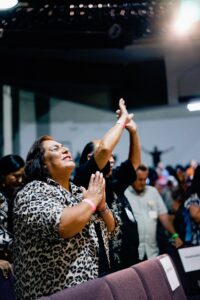 You may or may not immediately feel any different, but the New Testament describes several things happening when we come to Christ.
- We are forgiven (Ephesians 1:7).
- We receive eternal life (1 John 5:11–12).
- We become children of God (John 1:12).
- We receive the Holy Spirit (Ephesians 1:13).
And:
“Therefore if any man be in Christ, he is a new creature…”
— 2 Corinthians 5:17
Becoming born again is a starting line, not a finish line. It is not a license to sin and we will still make mistakes, but the incredible shift is that we now have a new life of hope ahead of us—one defined by a deep, personal connection with the Father, Son, and Holy Spirit.
 Good hearts and good deeds both matter very much, but they do not save you from God’s righteous judgment.
Ephesians says we are saved:
“By grace…through faith…Not of works…”
— Ephesians 2:8–9
The very next verse says we are:
“created in Christ Jesus unto good works.”
— Ephesians 2:10
So:
Grace → Faith → Salvation → A changed life and good works results
NOT
Good works → Becoming worthy → Salvation
Why are we saved by grace and not of our own works? Ephesians also answers that:
8 “For by grace you have been saved through faith. And this is not your own doing; it is the gift of God,
9 not a result of works, so that no one may boast.”
— Ephesians 2:8-9 ESV
So that no man can claim it was by his own goodness that he was saved.
Once again, Jesus alone saves….
 John wrote to believers:
“If we say that we have no sin, we deceive ourselves, and the truth is not in us.”
— 1 John 1:8 KJV
He also wrote:
“My little children, these things write I unto you, that ye sin not. And if any man sin, we have an advocate with the Father, Jesus Christ the righteous.” KJV
— 1 John 2:1
Christians should not want to sin, but becoming a Christian does not make you incapable of sin, instead, it gives you an avenue to receive forgiveness from the Father, through the Lordship of Jesus Christ in your life.
There are many Bible stories of men and women of faith who still sinned, yet were ultimately forgiven and received salvation. These stories serve as a powerful reminder of God’s enduring grace.
Biblical Figures: Failure & Restoration Overview
| Person & Role | Scripture Locations | The Failure | The Restoration |
|---|---|---|---|
| Simon Peter (Apostle & Leader of the Early Church) |
|
Denied knowing Jesus three times out of fear on the night of Christ’s betrayal. | The resurrected Jesus met him by the sea, asked him three times “Lovest thou me?”, and re-commissioned him to lead the early Church. |
| King David (King of Israel & Ancestor of Jesus) |
|
Committed adultery with Bathsheba and orchestrated the murder of her husband to cover it up. | He confessed his sin in deep brokenness, and God forgave him, preserving his royal lineage leading to Christ. |
| The Apostle Paul (Pharisee turned Missionary & Author) |
|
Actively persecuted, arrested, and approved the execution of early Christians, believing he was serving God. | Encountered Christ on the road to Damascus, repented, and was transformed into the primary apostle to the Gentiles. |
| Jonah (Prophet of Israel) |
|
Flatly disobeyed a direct command from God and fled by ship to avoid preaching to Nineveh. | Repented inside the belly of a great fish, was delivered back to dry land, and successfully led Nineveh to repentance. |
| Miriam (Prophetess & Sister of Moses) |
|
Allowed pride and jealousy to lead her into gossip and rebellion against Moses’ leadership. | Struck with leprosy as discipline, she was healed and brought back into the camp after Moses interceded for her in prayer. |
| John Mark (Missionary Companion & aka “Mark” the Gospel Writer) |
|
Abandoned Paul and Barnabas during their first missionary journey due to fear or immaturity. | Mentored by Barnabas, he grew in faith until Paul later wrote that Mark was “profitable to me for the ministry.” He also authored the Gospel of Mark. |
But what if someone repeatedly sins?
Scripture contains strong warnings about persistent, unrepentant sin while simultaneously teaching that believers still struggle with sin.
John writes:
“Whosoever is born of God doth not commit sin…”
— 1 John 3:9
Yet the same letter says:
“If we say that we have no sin, we deceive ourselves…”
— 1 John 1:8
Those passages cannot reasonably mean both “Christians never sin” and “Christians sin.”
The larger context concerns the character and practice of a person’s life. Salvation offers grace to the Believer by distinguishing in Scripture between struggling or falling into sin and embracing sin as an ongoing way of life without repentance.
That distinction deserves serious consideration rather than an easy slogan.
Scripture takes persistent, unrepentant sin seriously and specifically says we must not rely on grace as an excuse to be able to sin. In Romans, the apostle Paul explicitly warns against using God’s grace as a license or excuse to keep sinning.
“What shall we say, then? Shall we go on sinning so that grace may increase? By no means! We are those who have died to sin; how can we live in it any longer?”
— Romans 6:1–2
“What then? Shall we sin because we are not under the law but under grace? By no means!”
— Romans 6:15
“You, my brothers and sisters, were called to be free. But do not use your freedom to indulge the flesh; rather, serve one another humbly in love.” — Galatians 5:13
Additionally, Jude 1:4 warns against false teachers who “pervert the grace of our God into a license for immorality.”
Scripture takes persistent, unrepentant sin seriously and specifically says we must not rely on grace as an excuse to be able to sin. In Romans, the apostle Paul explicitly warns against using God’s grace as a license or excuse to keep sinning. There are only two sins mentioned in the Bible that are spoken of as being unforgivable: blasphemy of the Holy Spirit and apostasy. For all other sins, God offers a way to be forgiven through Jesus.