The short, and most honest answer, is that no one but God knows for sure. However, we can look to the Bible for more specific guidance and examples as to how God chooses or allows our leaders.
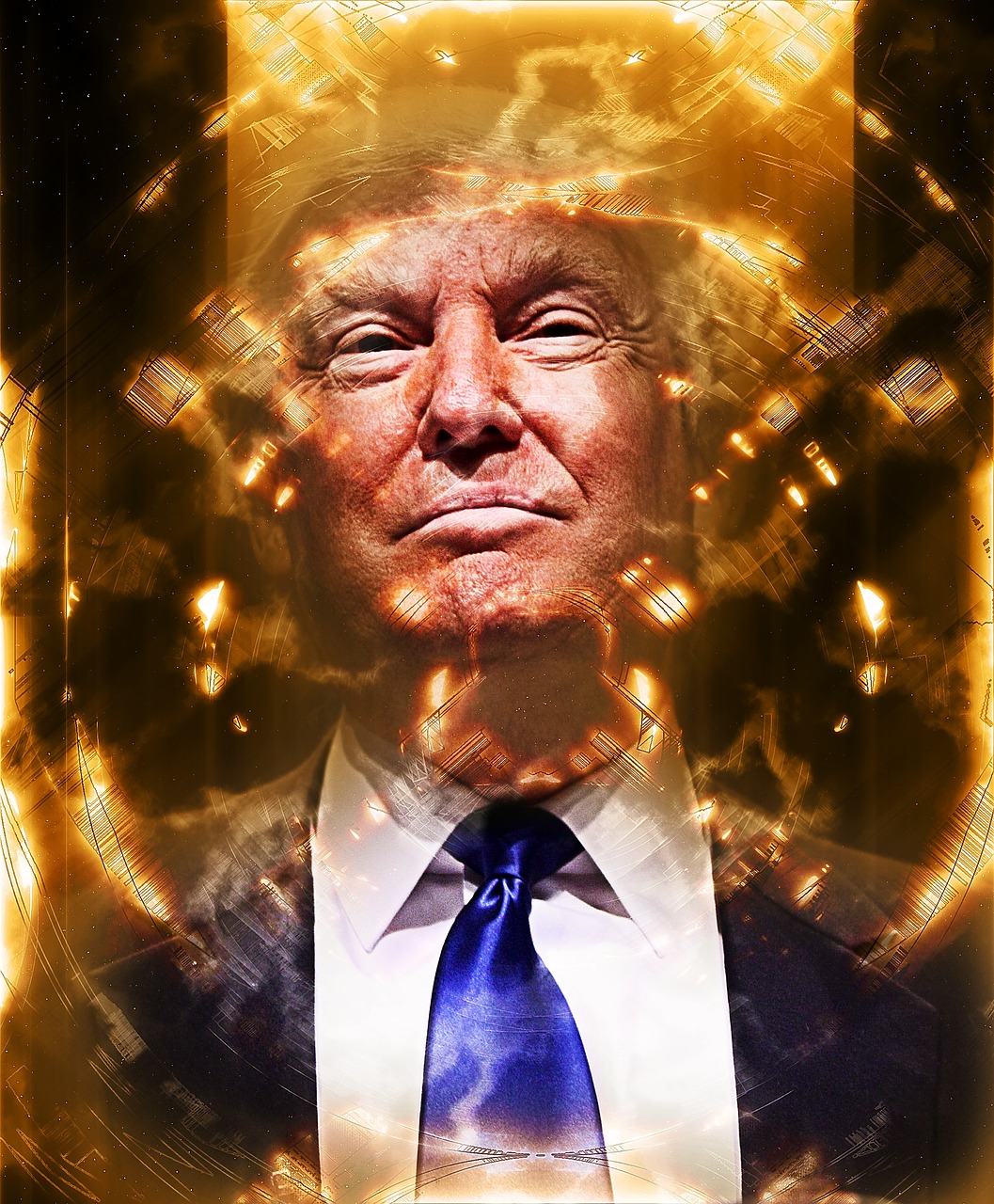
Yes — but not in the way modern political rhetoric often argues. Scripture is very clear that God is sovereign over rulers:
Daniel 2:21 (KJV) says:
“He removeth kings, and setteth up kings…”
Epistle to the Romans 13:1 (KJV) says:
“The powers that be are ordained of God.”
But notice that it does not say God only uses “good” people? In fact, the Bible demonstrates that God has raised up “heathen” rulers to serve His purpose. Some examples include:
- Pharaoh – God used an already hardened, evil Pharaoh as a vessel to display His superior power and glory through the ten plagues, ultimately ensuring the deliverance of the Israelites
. While God did “harden” his heart, Pharaoh was independently evil, having already initiated the oppression of the Hebrews and rejecting God’s authority. (Learn More: The Bible Project) - Nebuchadnezzar – God used the prideful Babylonian King Nebuchadnezzar as His sovereign instrument to punish Israel and, through humbling him with insanity, demonstrated His supremacy over all earthly rulers, ultimately bringing the pagan monarch to acknowledge and worship the one true God.
- Cyrus – God used the pagan King Cyrus as an anointed, unwitting instrument to conquer Babylon and liberate the Jewish captives to rebuild Jerusalem, and while Cyrus was a conquering monarch,
he is not portrayed as evil but rather as a“shepherd” and“messiah” (deliverer) in scripture. (Learn More: Godly Increase) - Assyria – God used the brutal, self-serving Assyrian Empire as a “rod of anger” (Isaiah 10:5) to physically punish, plunder, and bring correction to the rebellious kingdoms of Israel and Judah, acting as a divine instrument of judgment to compel repentance while remaining responsible for their own prideful cruelty.
Not all leaders appointed or used by God were righteous men, therefore, it is important to remember that Divine sovereignty is not the equivalent of divine endorsement of all actions. In short, just because God uses someone does not mean they are a righteous person (i.e., Judas Iscariot, Herod are other examples).
God can and has used rulers without that were amoral and ungodly to accomplish His Divine purposes.
No.
The Bible assigns that role to one person only, and not to a nation:
- Jesus Christ
Not to:
- Israel as a modern state
- Rome
- America
- Any empire
- Any religion
- Any person other than Jesus Christ, himself
Empires in Scripture rise and fall under divine providence, but none are presented as the mechanism of world salvation.
This is where the logic often goes wrong. Prophecy does not require human assistance at all. Period.
In Ezekiel 38–39, God says repeatedly:
“I will bring thee against my land…” (38:16)
The Lord Himself orchestrates the scenario for His purposes.
That means:
If Ezekiel’s war is future, God does not need:
- American foreign policy
- Evangelical lobbying
- Military escalation
- Any person, nation, organization, agency, government, group, religion, etc. …
… to fulfill it. Prophecy unfolds because of Divine sovereignty, not geopolitical activism. No one can do anything to speed up God’s plan — it is all executed in His timing.
That phrase can mean two very different things:
Meaning A (Biblical): God sovereignly allowed or ordained his presidency.
If so — that’s true of every president.
Meaning B (Messianic): God uniquely appointed him to save civilization or advance redemptive prophecy.
There is no biblical text supporting that claim about any modern leader.
When political rhetoric begins to sound like:
- Cyrus Language Applied as Prophecy:
- In Politics: When people use “Cyrus language,” they are saying, “This leader might be flawed or ungodly, but God has specifically chosen them as a tool to protect the faithful.”
- The Risk: It frames a politician as “anointed” by God, which makes criticizing them feel like you are criticizing God’s plan.
- Messianic Overtones:
- In Politics: This happens when a leader is described as the only one who can fix the country, defeat evil, or lead the people to a “promised land.”
- The Risk: It creates a “cult of personality” where the leader isn’t just a public servant, but a spiritual deliverer.
- World-Savior Framing: This is the idea that the fate of the entire world (or the ultimate victory of “good over evil”) rests on one person winning an election or holding power.
we are in theological territory Scripture reserves for Christ alone. In simpler terms, it means: When people start talking about a political leader as if they were sent by God to save the world, they are crossing a line from “politics” into “religion.”
There is no passage in Scripture commanding:
- The United States
- Gentile nations
- Modern believers
to preemptively align military policy to “help prophecy.”
If anything, New Testament instruction emphasizes:
- Prayer for rulers (1 Tim 2:1–2)
- Peaceable conduct
- Avoiding fear
- Trust in God’s sovereign plan
Nowhere does Scripture instruct Christians to engineer eschatological outcomes.
Here’s what you can safely say biblically:
✔ God is sovereign over prophecy.
✔ Christians are not commanded to advance prophecy through force.
✔ No modern nation is identified as a covenant agent of redemption.
✔ Military action is a prudential, not prophetic, matter.
✔ Messianic political language is theologically dangerous.
What you likely cannot responsibly say yet:
✖ “War with Iran would prevent Ezekiel 38.”
✖ “War with Iran would fulfill Ezekiel 38.”
✖ “America must act to advance God’s plan.”
Because Scripture does not connect those dots explicitly.
A Theological Boundary Line
The danger historically has never been watching prophecy.
The danger has been:
- Nationalizing covenant language
- Conflating patriotism with eschatology
- Assigning redemptive roles to political leaders
That’s not new. Christians did this with:
- Constantine
- The Holy Roman Empire
- European monarchies
- British imperial theology
- Cold War anti-communism
Every era has attempted to frame its dominant power as providentially central, but it is important to note that Scripture never explicitly does that for Gentile superpowers.
The honest conclusion, based on the text, is:
- Scripture does not mandate it.
- Scripture does not forbid it.
- Scripture does not frame it as required for prophecy.
It becomes a matter of:
- national security prudence
- moral reasoning
- just war considerations
—but not prophetic necessity.
Putting It All Into Perspective
Ezekiel 38 is still future prophecy and it will occur because God, and God alone, chooses it to be fulfilled:
“I will magnify myself…” (Ezekiel 38:23)