Has Ezekiel’s war already taken place?
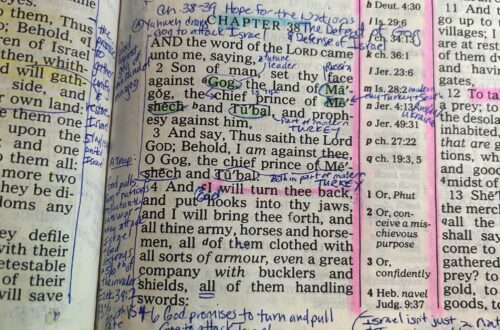
Ezekiel’s war is presented in Ezekiel Chapters 38–39, and is often called the “War of Gog and Magog” (not to be confused with Armageddon). Whether or not it has already taken place depends on how you read the Bible. While there is strong disagreement among the community of Christ believers about whether Ezekiel’s War is past, future, symbolic, or even identical to Armageddon, the Bible and history can both provide us with answers.
Why does it matter?
If this war has not taken place, all mankind should take note as Ezekiel’s War is not an ordinary war. It will be the bloodiest, deadliest war the world has ever seen involving an attack on Israel by a coalition of nations.
Ezekiel 39:2 states that God will personally destroy 5/6th of all Israel’s coalition of invaders. This is a war that involves fire from Heaven, earthquakes and other God-driven supernatural events that will rock the entire planet. The Bible states that God Himself intervenes between Israel and her invaders so the world will know that He is God. This war is not confined to Israel or any region; the events overtake the entire globe.
Here is what Scripture says and does not say about Ezekiel’s War.
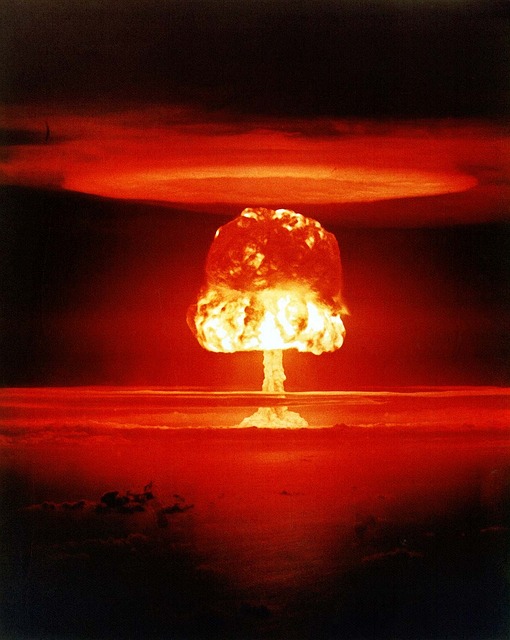
In Chapters 38–39, the prophet Ezekiel speaks of:
- Gog, of the land of Magog (Ezekiel 38:2 and 39:1)
- A coalition including Meshech, Tubal, Persia, Cush, Put, Gomer, and Togarmah (The coalition of nations led by Gog against Israel is primarily named in Ezekiel 38:2-6, with further listing in Ezekiel 38:13 and Ezekiel 39:1-6.)
- An invasion of Israel “in the latter days” (KJV: “in the latter years” – Ezekiel 38:8)
- Israel dwelling “safely” (Ezekiel 38:11)
- God supernaturally destroying the invading armies (Ezekiel 38:21-22)
- Massive burial efforts taking seven months (Ezekiel 39:12)
- Weapons burned for seven years (Ezekiel 39:9)
- The result: the nations know that the LORD is God (Ezekiel 36:23)
The big question: When does (or did) this happen?
Many dispensational and premillennial teachers see Ezekiel’s War as a literal, future war that is distinct from Armageddon.
1. “Latter Years / Latter Days”
The terms “latter years” and “latter days” are often associated with end-times prophecy, and Ezekiel 38:8 (KJV) uses the term “latter years” to describe when this war would take place:
“After many days thou shalt be visited: in the latter years thou shalt come into the land…”
2. Prophecy Fulfilled: Israel Regathered from Many Nations
Some argue Ezekiel 38:8 best fits the modern regathering of Israel beginning in 1948. This prophecy must occur before Ezekiel’s war can happen and was not previously fulfilled at any other time in history. By default, that would mean if the Israel prophecy was fulfilled in 1948, then Ezekiel’s war could not have already happened because it comes after that prophecy, not before it.
Ezekiel 38:8 (NIV) describes Israel:
After many days you will be called to arms. In future years you will invade a land that has recovered from war, whose people were gathered from many nations to the mountains of Israel, which had long been desolate. They had been brought out from the nations, and now all of them live in safety.
3. Ezekiel’s War Is Not Identical to Armageddon
When comparing Ezekiel’s War to Armageddon in Book of Revelation 16 and 19:
- Revelation places the final battle at Christ’s visible return. (Revelation 19:11-21)
- Ezekiel describes extended cleanup involving 7 months and special cleansing/handling to bury the dead (Ezekiel 39:11:16) and 7 years burning weapons Ezekiel 39:9-10).
- Revelation Chapter 19 seems immediate and climactic. There is far more that is prophesied to happen after Ezekiel’s War is over (it is not the end of times) including the building of a new temple.
Because of those differences, many see Ezekiel’s war as:
- Before the Tribulation (Most widely held view)
- Or early in the Tribulation
- Or mid-Tribulation
While there are many passages in the Bible to indicate Ezekiel’s War and Armageddon are two separate events, others see strong parallels between Ezekiel 38–39 and:
- Book of Revelation 19
- Book of Revelation 20 (Gog and Magog mentioned again)
Similarities:
- Nations gathered against Israel
- Divine, supernatural destruction
- Birds feasting on corpses (Ezek 39:17–20; Rev 19:17–18)
Revelation 20:8 specifically says:
“Gog and Magog” gather the nations after the Millennium.
Because of this, some argue Ezekiel’s prophecy is apocalyptic imagery that Revelation later reuses symbolically. However, others the Bible offers sharp distinctions between the three wars.
This view is less common among conservative evangelicals, but present in some Reformed or preterist interpretations.
This argument states:
- “Gog” may refer to historical enemies of Israel (possibly linked to ancient Anatolian rulers).
- Ezekiel may be using known northern threats as prophetic imagery.
- The prophecy may symbolize God’s protection after the exile.
However, there is no clearly documented historical event that matches the scale described in Ezekiel 38–39. Without any historical documentation that describes such a large scale global war/catastrophe, it is hard to support this argument.
Some scholars see Gog and Magog as:
- A symbolic representation of ultimate evil powers.
- A theological pattern of “final rebellion against God.”
In this view, Ezekiel is not giving a detailed military forecast, but a prophetic picture of:
God decisively defeating all future opposition.
Revelation then reuses this imagery to later describe the final rebellion after the Millennium. This argument has some key flaws to consider.
In Book of Revelation 20:7–9, Gog and Magog appear after the 1,000-year reign of Christ.
But Ezekiel describes:
- Israel dwelling securely
- Temple worship context (chapters 40–48 follow)
- Nations recognizing the Lord
Because of this, some conclude:
- Ezekiel’s war happens before the Millennium.
- Revelation 20 uses “Gog and Magog” symbolically for a later rebellion.
Ezekiel 38:11 says Israel will dwell:
“without walls… neither bars nor gates”
Some argue:
- That doesn’t match modern Israel.
- It suggests either millennial peace or a different historical setting.
This becomes one of the central interpretive tensions and deserve its own separate study.
Historically verified fulfillment?
No clear historical event matches Ezekiel 38–39 in scale and detail.
Theologically complete fulfillment?
That depends on your interpretive framework:
| View | Status |
|---|---|
| Dispensational premillennial | Future |
| Historic premillennial | Future (often Armageddon) |
| Amillennial | Symbolic / fulfilled spiritually |
| Preterist | Largely past or symbolic |
So….
If you read Ezekiel 38–39 in a straightforward, literal manner using the KJV:
- It reads like a large, future invasion.
- It includes supernatural intervention.
- It results in worldwide recognition of God.
- It is separate from, and precedes Armageddon.
There is no clean historical event that fully satisfies the texts describing Ezekiel’s War.
Additionally, the New Testament’s reuse of “Gog and Magog” complicates a strictly literal one-time interpretation as both mentions of Gog and Magog show differences between them as if they are two wars, not one.
Scripture does not explicitly state anywhere, “This is Ezekiel 38 fulfilled.” History does not support that it has taken place. And, if it has not taken place, then Ezekiel’s War is worth studying this sobering and devastating future event.